

Breeder:
Pernille Kristensen
&
Mads T. Olesen
Kaj Munks Vej 1
9000 Aalborg
Danmark
Tlf.:
+45 9814 3099
www.safkankedis.dk
- E-mail -


☺

Our Cattery
The Turkish Van
EMS-code: TUV
FIFé
standard for Turkish Van
Historie / oprindelse:
Den Tyrkiske Van er en gammel katterace fra mellemøsten. Oprindeligt stammer den tyrkiske van fra regionen omkring søen
Van i det nuværende Østlige Tyrkiet, men findes også i Armenien, det nordlige Irak og Iran. Alle steder hvor klimaet varierer
til ekstremerne.
Man ved. at den tyrkiske van kat er en meget gammel katterace, da man har fundet et billedskærerarbejde af en hvid semilanghåret
kat med ringe på halen, som kan dateres tilbage til år 1600 f.Kr, og den tyrkiske van er senere blevet afbilledet på segl,
malerier, stentavler og ornamenter. Da romerne erobrede området omkring år 75 f.Kr. adopterede de et emblem med en kat på
deres krigsbanner, og denne kat var ligeledes en lys ensfarvet kat med farvede ringe på halen, som netop karakteriserer det
vi i dag kalder den tyrkiske van kat.
I 1955 rejste journalisten Laura Lushington og fotografen Sonia Halliday rundt i Tyrkiet på job for det tyrkiske turistråd.
De bemærkede en dag, at kattene specielt omkring området Van bar en særlig lighed med den traditionelle angora type pga.
deres lange pels. Disse katte havde dog rødbrune markeringer på hovedet og en rødbrun ringet hale. De blev af deres tyrkiske
værtinde tilbudt to killinger, som ikke var i familie med hinanden. En hunkat fra det sydøstlige Tyrkiet og en hankat fra
Istanbul, som de tog med hjem til England, hvormed de første van katte kom til Vesteuropa, selvom de gennem århundrede var
blevet holdt som kæledyr i Tyrkiet.
Begge killinger blev sat i karantæne i England og senere nedkom hunkatten med tre
killinger med næsten identiske hoved og hale markeringer. Laura startede et avlsprogram med kattene, og i 1969 blev disse
katte officielt anerkendt i England som den tyrkiske van.
Legenden
En historie siger, at på Noahs ark var der pludselig for mange mus, da disse som bekendt yngler ret kraftigt. Det blev
efterhånden en museplage uden lige, og Noah spurgte en løve om hjælp til at løse dette problem. Løven nyste en gang, og ud
kom en kat med disse specielle van-aftegninger. Katten gjorde hurtigt en ende på museplagen, og da arken strandede på Tyrkiets
højeste bjerg Ararat, gik van-katten i land, og søgte ned til området omkring
Van-søen, hvor den fik sit helt eget område,
og har hersket der lige siden.
En anden historie siger, at Allah velsignede van-katten ved at sættte sine to tommelfingre på dens hoved. Derfor fik
van-katten fik sine specielle aftegninger.
Udseende
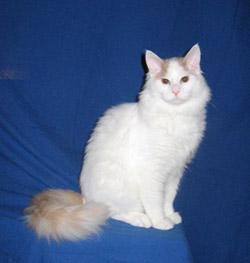
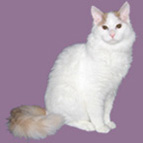
Den tyrkiske van er en semilanghåret kat med kalkhvid pels og farvede markeringer på hoved og hale. Hankatten er betydelig
større end hunkatten, og kan veje op til 8-9 kg. På grund af det ekstreme klima hvori disse katte lever, er den tyrkiske van
en muskuløs kat, med betydelig kropsstyrke, kraftig knoglestruktur, og med et stærkt overlevelsesinstinkt. Hovedet er let
trekantet med en lige næse. Øjenfarven kan være ravfarvet, blå eller odd eyed dvs. to forskellige farvet øjne.
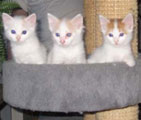
De første tyrkiske vankatte i Vesteuropa var hvide med rødbrune markeringer på hoved og hale. Disse markeringer er det mest
påfaldende træk ved den tyrkiske van. Hovedmarkeringen består sædvanligvis af to farvede pletter mellem ørene, blot adskilt
af en tynd hvid skilling. Halen er ligeledes farvet.
Pels (-pleje)
Da den Tyrkiske van lever frit i naturen, er den i stand til at klare sig selv i de barske Øst-tyrkiske omgivelser, hvor klimaet varierer til ekstremerne. Den tyrkiske van har tilpasset sig det ekstremt varierende klima således, at pelsen varierer en smule fra vinter til sommer.
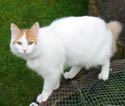
Dens pels er utrolig blød og kashmir lignende. Der er ingen underuld, så pelsen filtrer ikke, og er let for katten selv at holde. Pelsen er også vandtæt og nærmest skyer vand. Såfremt katten hopper i vandet eller bliver våd ryster den sig bare, og er hurtig tør igen. Ligeledes hænger snavs og utøj sjældent ved pelsen.
Anerkendelse
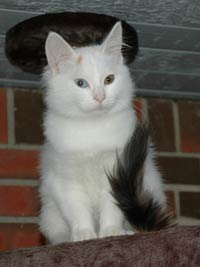
I 1969 blev racen anerkendt i England, og i 1971 kom anerkendelsen i FIFé. Dengang var den anerkendte farve kun rød/hvid,
mens øjenfarven var ravfarvet. Dette var standarden i mange år indtil man introducerede den fortyndende form (Creme/hvid) og
de forskellige øjenfarver (Blå og odd eyed). Senere i 1997 er andre farvevariationer blevet accepteret indenfor FIFé. Disse
farvevariationer inkluderer sort, blå og tortie (trefarvede også kaldet padder).
Den første tyrkiske van kom til Danmark i 1977, men det første tyrkiske van kuld blev først lavet i 1988.
På trods af kattens smukke udseende er det stadig en forholdsvis sjælden katterace i Danmark. Der er langt mellem de
forskellige opdrættere, og det totale antal tyrkiske van katte her i landet ligger
på omkring 200 stk. Langt de fleste
tyrkiske van katte er stadige rød/hvide, men der er i de senere år kommet
flere katte med andre farver til landet.
Temperament
Den Tyrkiske van er en meget livlig kat med et bestemt temperament. Den holder af socialt samvær med både mennesker og dyr, men ser ikke sig selv som et kæledyr, men derimod som en ledsager. Den tåler ikke at blive ignoreret af sine mennesker, men forventer at man straks hilser på den, når man kommer hjem. - Også selvom den ikke giver udtryk for at have savnet selskab. Hvis den vil kæles for, skal den nok lade sine mennesker det vide. Så tramper den straks rundt lige, hvor den får mest opmærksomhed, og bliver vedholdende ved indtil den har fået de kæl den behøver. Ignorerer man den alligevel, kan den let finde på at straffe sine mennesker ved at vælte noget på gulvet. Den forventer, at menneskene er der, når den har behov for det, og den skal nok minde os mennesker om, at den er betydningsfuld. Den har en god hukommelse og lærer hurtigt af sine fejl.
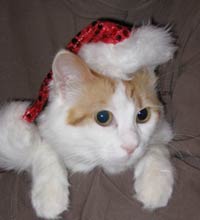
Den vil gerne ligge i nærheden af sine mennesker og holde øje med dem eller endda hænge på ryggen af menneskene. Men det er
ikke en elegant kat. Den kan let falde ned, når den ligger og hygger sig, men lader altid som ingenting. Den har jo sin
stolthed.
Den tyrkiske van er også meget betaget af vand. Et af dens kendetegn er faktisk, at det er katten, som elsker vand og ind
imellem kaldes den tyrkiske van også ”den svømmende kat”. Dette kendetegn kommer nok af, at vankatten i naturen har været
vant til at fange sin føde i søen. Samtidig har de mange mineraler i
bjergsøen, hjulpet katten med at holde pelsen ren og fri for utøj.
Mange oplever, at den tyrkiske van i fangenskab fascineres stærkt af
rindende vand, og ligefrem plasker i vandet. Man kan også risikere at få besøg i brusebadet eller badekarret. Men skal katten
vaskes med sæbe, så er den ikke længere interesseret.
Den elsker også at rulle sig i jord og sand og bliver derved meget beskidt, men kort tid efter er pelsen hvid igen. Denne
handling er fra naturens side med til at holde utøj væk fra pelsen, og er noget den tyrkiske van kat, har taget med sig i
fangenskab.
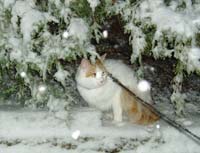
Den tyrkiske van er ikke bange for naturens luner. Den har ikke noget imod at komme ud og lege i sneen, og følger fascinerende
regndråbernes gang.
Sundhed og sygdom
Da den tyrkiske van er en katterace, som lever isoleret i naturens barske egne, har den ikke de store sundhedsproblemer. Det er generelt en meget sund og robust kat, men som ved alle andre katte bør man være opmærksom på tandsten.
Click here to go to the top of the site